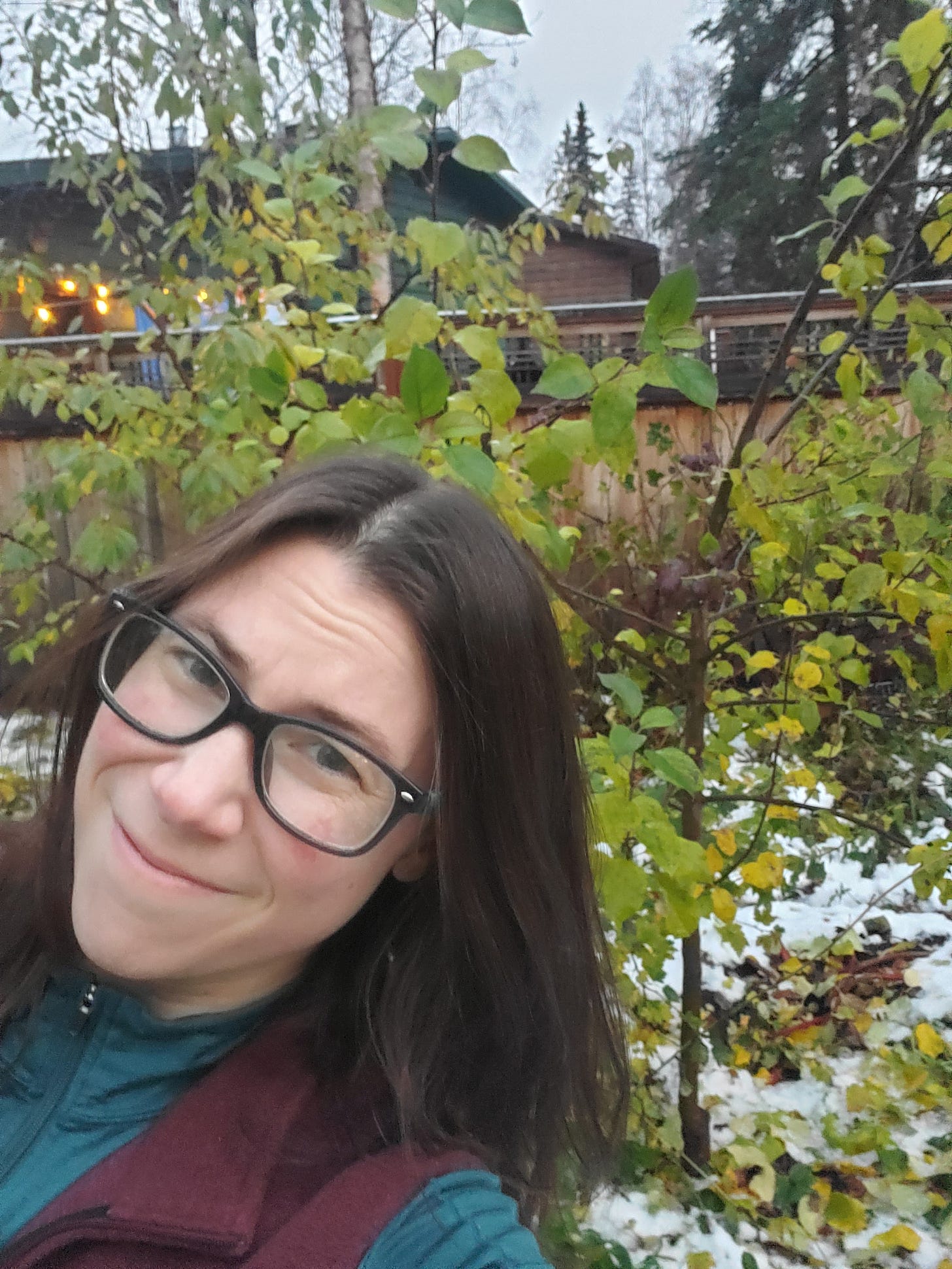
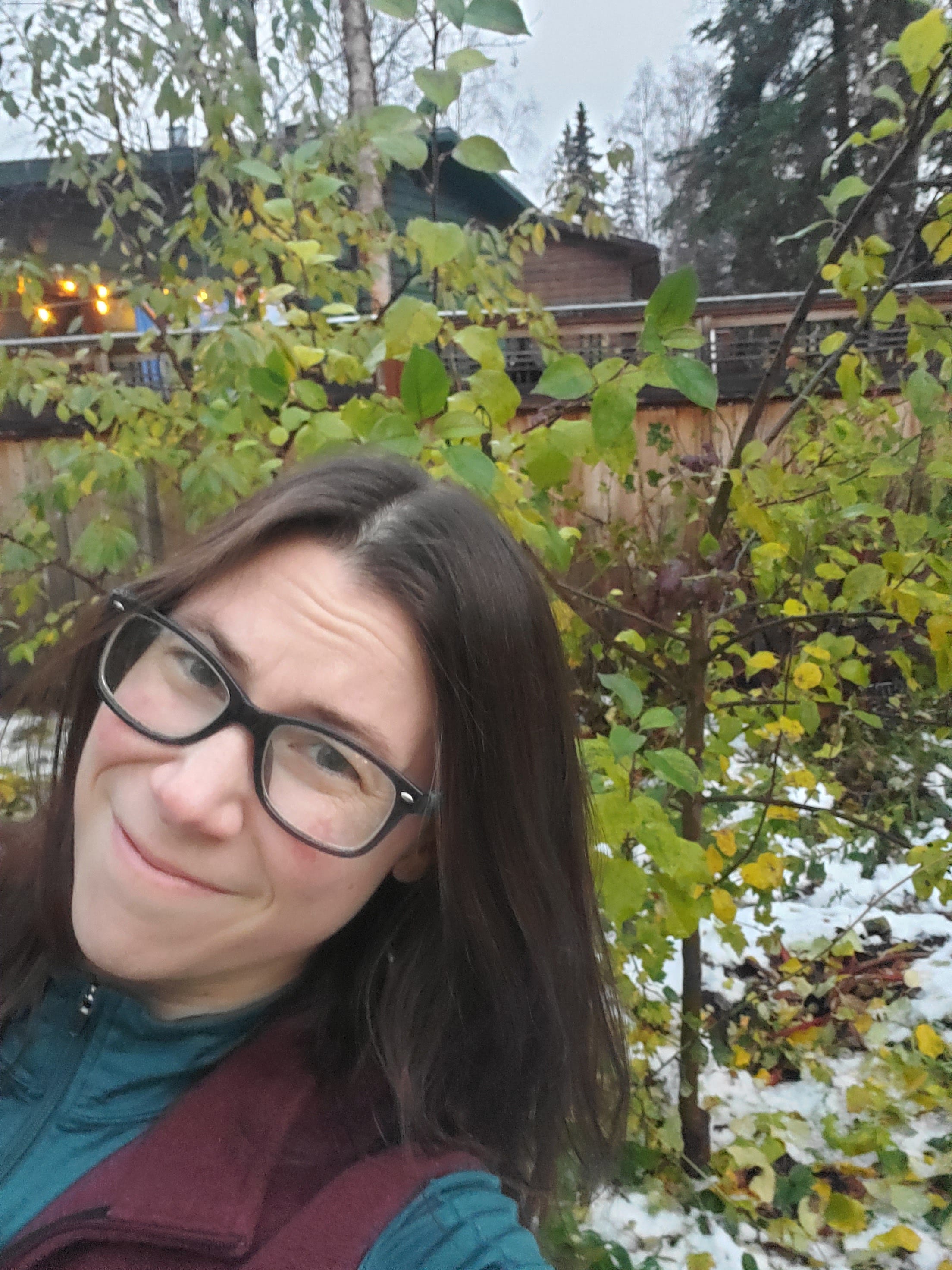
Yesterday, I was out in the dark at 6 AM, shivering in the snow, whacking my apple trees with a broom.
“Seriously you guys,” I scolded them. “You didn’t see this coming?”
It was first snow.
Most trees – smart trees – prepare for the fall by turning their leaves yellow and dropping them, so that they don’t get flattened by snow.
But my apple trees?
They prefer to hold onto their leaves for as long as possible.
They’re skinny, so they bent quite a bit. One was almost bent to the ground.
My apple trees are doing something that we humans do, too.
But holding onto things in the wrong season can get you killed, or at the least bent out of shape.
One Season’s Skill, Next Season’s Liability
Life presents us with all kinds of crappy situations that we need to develop skills to handle.
We need to develop armor, coping mechanisms.
For example:
-
If your parents get upset when you ask for attention, you learn to be invisible.
-
If your brother laughs at you every time you tell a creative story, you learn that creativity is embarrassing and become painfully practical.
-
If no one will agree to pay you decently for your work, you learn you’re not worth it and accept low pay.
These lessons become the boundaries of how we live our life.
They help us survive the hard seasons. They help us survive living with our parents and our brother, and accepting the fact that we can’t get decent work right now.
Trouble is, we can’t carry those coping mechanisms with us forever. We have to put them down before they become a disease.
Carrying Rafts Over Mountains
Buddhism has a great analogy of a guy who needs to cross a wide, rushing river.
So he works for days, sweating in the woods. He chops down saplings, he gathers vines. He ties them together, they disintegrate, he tries again… and again. At last, he has a lovely raft.
Finally, he slips into the cool water and rows across the fast-moving stream to the other bank.
Success! He made it!
He pats his loyal, beloved raft.
Then his head tilts up – he didn’t notice how BIG the mountain ahead looked from the other side of the river.
Is he going to be able to carry the raft up the mountain?
No.
It has served him well. But climbing mountains is hard enough without a raft on your head. He is going to have to leave it behind.
Likewise, our coping mechanisms help us get through something, help us get past something in our lives.
But when it’s time to move on, we have to let them go. We can’t carry them with us, or they will unduly weigh us down in the project of doing what comes next.
A Time for Letting Go
Right now it’s fall where I live. It’s nearing the closing of the year.
I always feel like the year ends on Samhain, Halloween. That’s when the ancients believed the old year dies and the new year is not yet born. The crops are dry and yellow in the fields, and the days slip into cold darkness.
Our bodies want to withdraw into the silence and inwardness, the darkness of the in-between.
It’s a time of endings, thanking and releasing what has served us up til now, but whose time is over. And then letting go.
Just like the trees drop their leaves – what has fed you in the past, but weighs you down in the season you’re in now?
Like our river-crosser – what skills have sustained you in the past, but are too heavy to carry over the next mountain?
Selflessness Can’t Last Forever
For me? I’ve realized I have this belief that being selfless, and needing nothing, and inconveniencing no one is somehow good.
When I was a kid, my little sister was sick a lot and my parents were very sleep-deprived and overwhelmed. I coped by becoming someone who was easy, and fine, and needed nothing.
In school, it worked great – the teachers loved me, and that helped make up for the fact that the other students didn’t like me at all.
As a young mom, it helped me survive years of tending the needs of tiny humans every waking moment without having three stolen minutes to meet my own.
Needing nothing has helped me survive.
The trouble is, this was only ever a temporary fix. You can’t pour from an empty bucket, grow from depleted soil, or build a life you want from a nervous system that doesn’t trust you to do basic things to take care of yourself.
I realize now, nourishing myself not only allows me to continue nourishing everyone else, but it lets me grow into new and better life stages as well. It is also the foundation of asking for money and value exchange, like a grown-up with a business, so I can sustain the work of building things that help people (and pay my rent).
I recently heard a definition of humility from Jesse James Carver and Nathalie Agnes: that humility is seeing yourself as neither above or below anyone else, not better or worse.
This was revolutionary for me. I was used to putting myself below people, as a kind of favor. But I’m finally understanding that imbalances like that just keep us from sustaining the system.
So while being “fine” and needing nothing helped me cross the river of my childhood and young parenthood, it also makes me a very tired human and a terrible business owner.
I’m letting it go.
And instead, I’m working on what I call sustainable interdependence. The idea that, to create something that’s good, meaningful, and valuable for everyone involved, we have to value and tend the needs of all of the parts, including ourselves.
Thank and Release
So that’s what I’m letting go of this season: the idea that selfless giving is a long-term solution.
Like my apple trees, I’m trying to get all of the habits and attitudes that come from it thanked and scraped off by the time the winter comes, and I need to make sure that I’m agile enough to hold up under difficult times, under the weight of whatever comes next.
I’m asking myself:
-
What did this belief or attitude serve?
-
How did it help me?
-
How does it ultimately affect the greater good I believe in?
-
What belief do I need instead, so that I can let this one go?
-
And how can I act in accord with that new belief, instead?
And if, like me, hanging onto your creative life is definitely something you are NOT dropping, you may want to subscribe below to make sure you don’t miss the next letter.
Thanks for reading,
– Morgan
P.S. This one on coping with the chronic scaries of creative life is also pretty good:
Leave a Reply