
In Irish, when you have an emotion, you don’t say, “I am sad”. You say “saddness is on me”.
It’s just a visitor; not who you are.
I have “empathy on me”.
I don’t like to say “I’m an empath”, cause that sounds a little too dramatic, too identity-crusting, too ridiculous.
But I pick up on way too many feelings that don’t belong to me. Most of the time.
Empathy in Action
For me, that means I tend to feel other people’s feelings in my body like other people see colors. I pick up where in the body it is, how it’s moving. Sometimes images or a sense of why goes with it. I’m a pattern recognition ninja.
I can walk into a room, and suddenly feel overwhelmed with this huge, random feeling that has nothing to do with me or what I was thinking about before. I look around, and notice the woman in the yellow shirt seems to be having a really bad day, she’s frustrated and ragey and trapped, but she’s trying to smile and hold it all in, as she’s casting around for five minutes to check the disaster on her phone, panic rising.
If I go back outside, the feeling can start to dissipate. Or it can stay stuck for days.
To clear out what is my feeling and what is someone else’s, I have to process them. I have to understand why someone was feeling what, in contrast to exactly why I’m feeling what. Once I understand the difference, I can let it go.
It doesn’t happen all the time. And I have done a LOT of inner work to try to keep my own inner slate clear so that I don’t get tangled up in other people’s feelings.
But being aware of – and needing to disentangle the complexity of – human emotion isn’t like a fun hobby for me. It’s a baseline requirement for functioning.
I’m the Weirdo
So when we try to talk about understanding the nuance of human emotion, full disclaimer, this IS an experimental study for me.
I’m just here in the trenches with my shovel, noticing way too much about what everyone else is feeling all the friggin time.
And having to explain it thoroughly to myself, so I can put it back down.
Hello.
Things I’ve Learned About Emotions from Noticing Them Constantly
-
Every feeling has a need behind it. If you can just understand the need, it takes a lot of the teeth out of the feeling. You hate the world? Probably it’s cause you hate the soul sucking work you do every day out of fear to survive, but you don’t feel like you can quit, so you just internalize the misery, which eventually festers into rage.
-
Seeing and understanding a feeling are the first steps to releasing it. They are almost always there for a reason. If you can accept the message it’s trying to deliver, feelings often dissipate.
-
The worst feelings are usually festering infections. Even minor dissatisfaction that sits buried and ignored for decades can start to fester into a much bigger, more horrible-seeming problem than it needs to be. Feelings need to flow. Congestion is the worst thing for them.
-
Some feelings are weirdos. Things like love and grief don’t follow the typical rules – they recur, they have a whole life below what we even can feel, and they pull us in important life directions.
-
Usually people hide their feelings for a reason. People say “don’t be fake”, but completely open, honest communication is almost never on the menu. We are all faking to some extent – either to meet social norms, to protect something that feels too vulnerable, or to protect other people from our own demons.
-
Accepting people makes a big difference. You often don’t need to address the feeling directly. Just sitting alongside someone, saying “hey,” and existing nearby can help release some of that tension. We usually don’t want to be “changed”. We just want to be allowed to be what we always were in the first place. That acceptance is often what creates the understanding and mental space needed to make a change naturally.
-
Feelings follow patterns. They are less like logical categories and more like chaos theory or turbulence. They are never the same twice, but we can recognize and predict their behavior by their patterns and connections.
Life as an “Empath”
If we are going to be talking about the project of understanding our feelings and inner senses well enough to experiment with them and use them in a way that helps our lives – you need to know where I’m coming from.
I’m not a psychic or a wizard. I’m just wired to pick up on more internal stuff than the average bear.
I actually spent my first 20+ years thinking that everyone saw what I did when they walked in a room, and they were just following some rules of graceful social secrecy that I didn’t understand.
I learned early that people don’t want you to talk about their hidden feelings. They hid them for a reason.
So making a space to discuss them now feels like a big thing. It needs an announcement (this essay).
Don’t Dam the River
FYI, the absolute worst possible thing you can do to an empath is pretend not to feel what you’re feeling to “protect them”.
I had this lovely, older neighbor who I told about my empathy issue, once.
He decided to protect me from all the suffering he was going through with his health issues by either avoiding me or suppressing his feelings or pretending to be happy.
Which is quite a mind f*ck, let me tell you.
He knows he’s sad. I know he’s sad. But I also know he doesn’t want me to know he’s sad. And he wants me to think he’s happy. So I’m supposed to pretend that I believe he’s happy. While knowing he’s sad. And trying not to hurt his feelings by saying he’s sad, but also delicately leaving open the door to discussing the possibility of sadness. So he could feel less horribly congested about being sad.
It’s very confusing. To say the least.
And it feels horrible for everyone involved.
Honesty Is the Best Bet
I would much rather have someone come up and tell me they hate me and I’m the most annoying person they’ve ever met than pretend to like me.
Then I can just say, “Yep! You sure do!”
And not have to spend hours beating around the bush.
Frankly, we are all better off just trying to honestly see our feelings for what they are and share them (kindly).
It’s the feelings we bury, or that we feel too ashamed to share, that end up metamorphosing into monsters.
No matter how cute the bunny – if you lock it in a closet for years it’s likely to turn into a goblin.
So that is what this whole project is about.
Recognizing the feelings as they come, learning to see them with nuance, learning to listen to the message they bring, holding them with maturity, and releasing them with awareness.
So the Next Time You Have a Weird, Difficult Feeling
Invite it in, like a distant relative who just knocked on your door. You don’t have to invite it to stay indefinitely and make up the guest bed. But don’t hide under the kitchen table hoping it will go away – or drag it inside and throw it down the basement stairs for 20 years either.
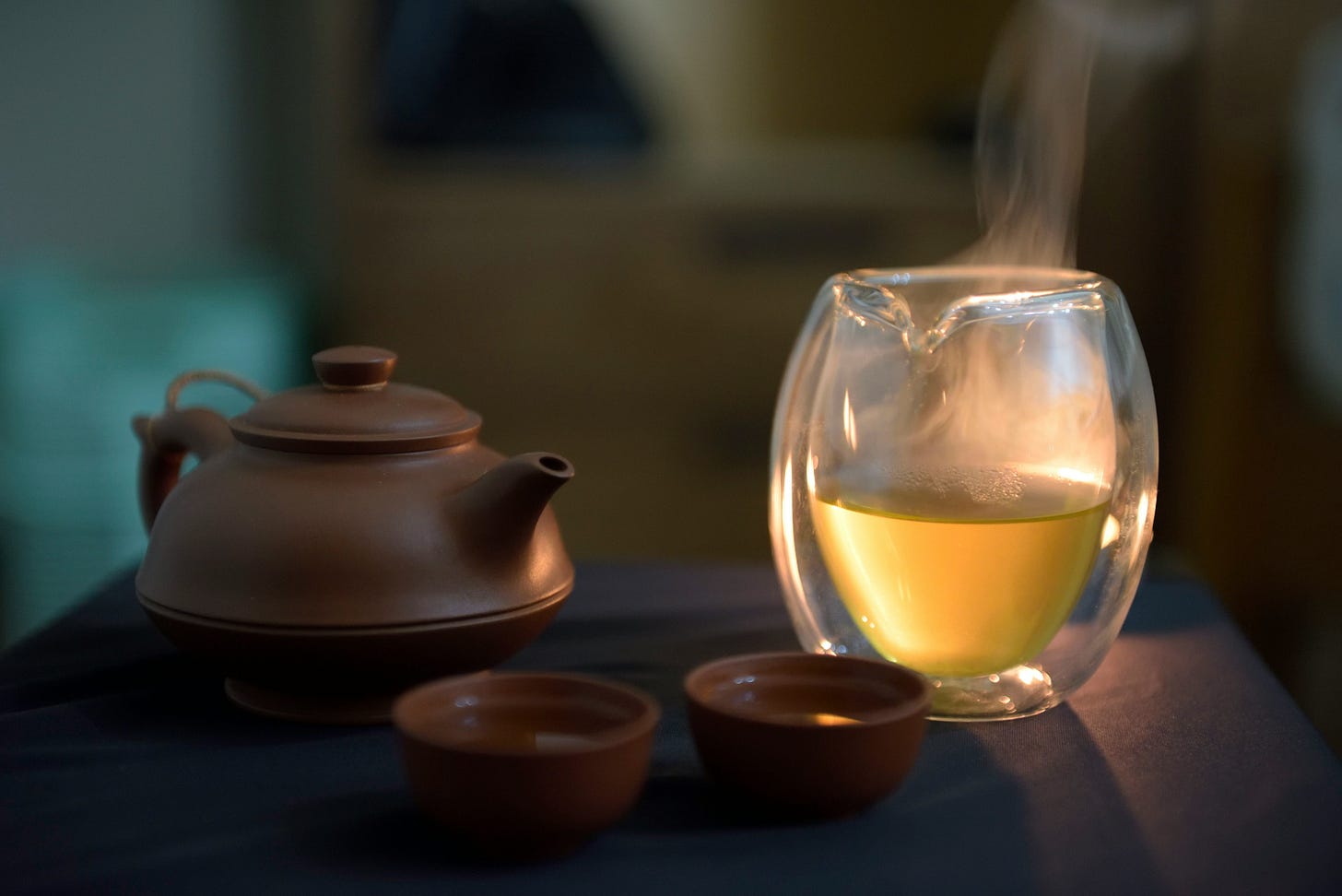
Instead, just invite it in for a cup of tea. Be polite. Sit with it and listen to it’s story.
Ask questions so you understand.
-
Who are you and what do you feel like? – Feel it fully in all it’s weird complexity. Feelings are rarely “happy or sad”. They come in flavors more like “gleeful terrified frustration with an edge of envy”, or “sorrowful needy lack of connection with a side of angst”. Write it out, if it helps.
-
What caused this? – This part is more like finding your missing keys. What thoughts and feelings were you having before this one? And before that one? And before that one? What were you doing/thinking about at the time? Trace it’s origin story.
-
What is the need or desire behind each piece? – Feelings are almost always here to tell us there is a mismatch between what we have/see/think and what would feel “right” for us. What do you want, at core, that would make this feel better? (Hint: that doesn’t mean you’re going to get it).
-
Parent the feeling and meet the need – Unfortunately, being a good adult rarely means giving people what they want all the time. Instead, your job is to translate between what your feeling needs and what is actually, currently available to it. Or what constitutes a good, healthy life choice.
-
Thank it and release it – Remember, it doesn’t have to live here forever. Let the feeling go.
Feelings aren’t random. They follow patterns, they are trying to tell you something, and you can learn to understand them the same way you can learn to read a room. You don’t need to be an empath. You just need to stop treating your own felt sense like an annoying solicitor and actually listen to what it’s trying to tell you.
If you feel too much too, this is your permission to sit with it and listen to it. To sort what matters, and what is yours, from the noise.
Leave a Reply