One of the biggest problems with “Just DO It!” advice is aim. What on Earth are you supposed to “just do?”
A choice is required, an assessing of the field. Aim.
If you are choosing a niche, a topic, a product, a career, a relationship. Choosing a rule for your kids, a habit to hold yourself to, a path to walk.
It so often seems like One Big Decision.
Niching has been the bane of my existence recently – it seems like a giant choice that will affect everything to come.
But that is an illusion. And the real work is much less flashy.
Staying Awake for the Rocks
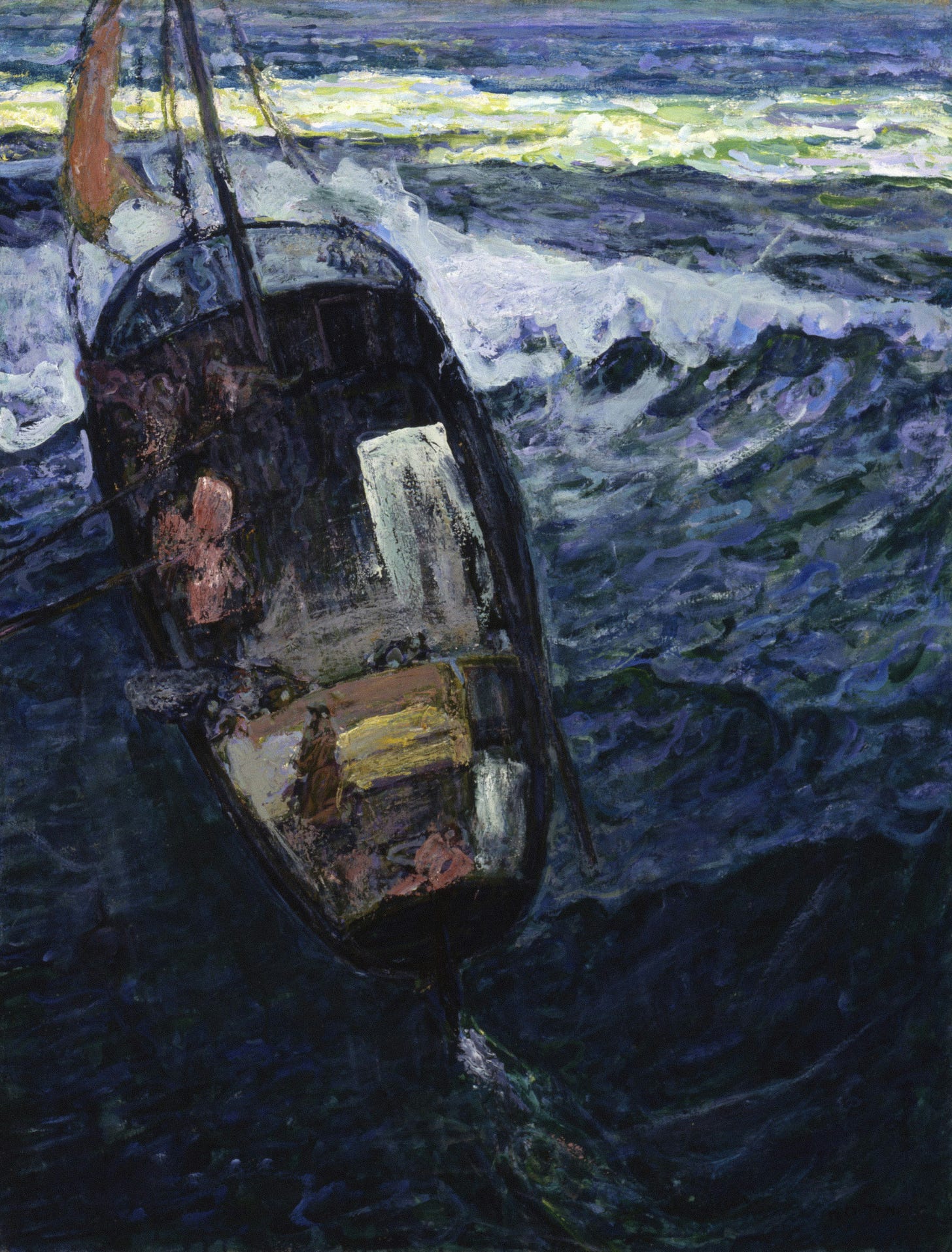
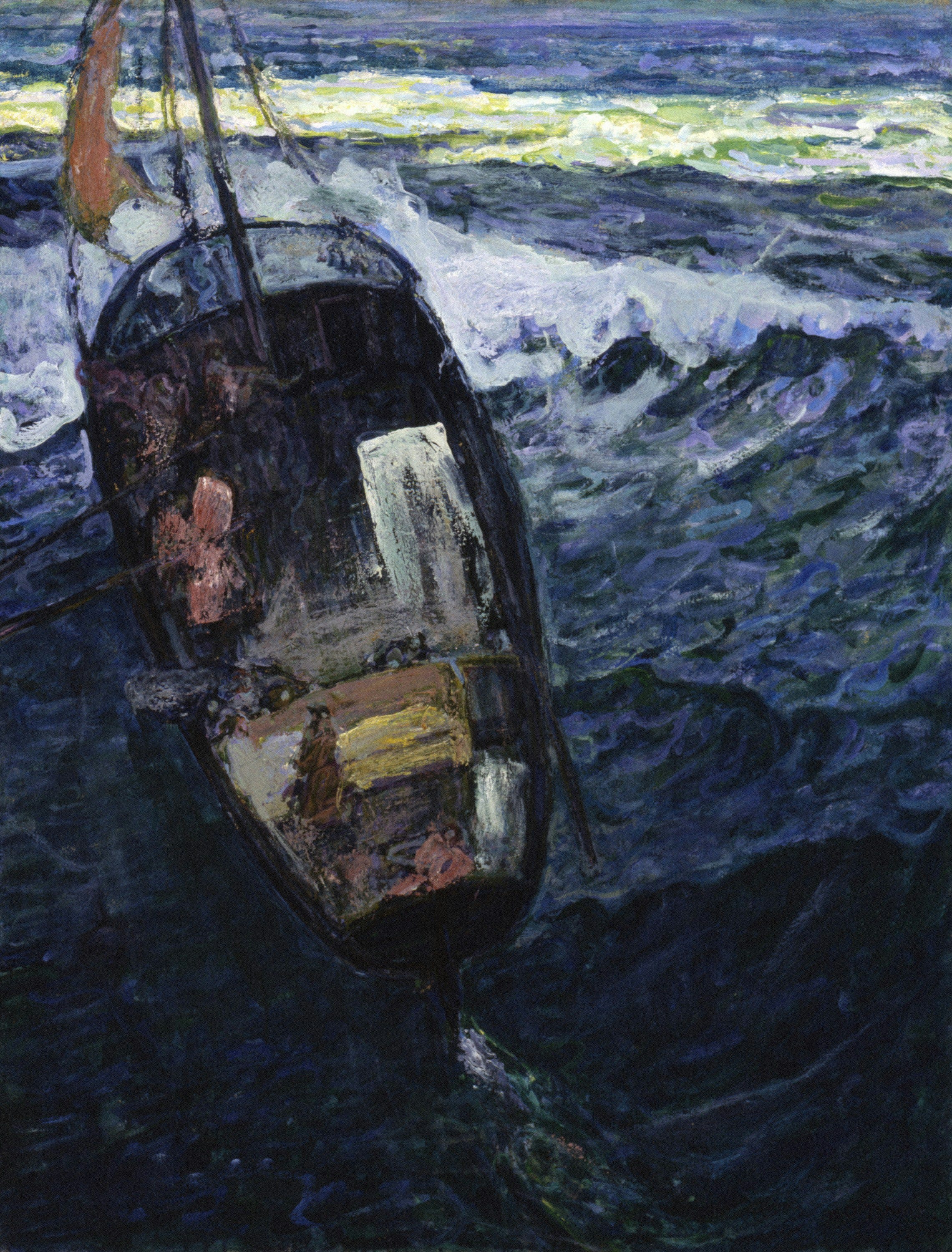
In his book on work, “Crossing the Unknown Sea,” David Whyte tells about a time when he was a young mate on a sailing ship. The new captain had gone to sleep, and the crew noticed that the ship seemed a little bit off course, but they accepted the captain’s wisdom and ignored it.
Within a few hours, Whyte woke to the ship nearly crashing against the rocks of a cliff. He leapt out of bed, ran upstairs past the sleeping captain, and steered the ship away just in time.
The crew members grumbled about how the new captain was incompetent. But Whyte noticed that it was the crew’s responsibility to follow their intuition and steer the ship all along. Someone should’ve told the captain.
He says this is much like how, in our working lives, we want someone to tell us what to do. Someone in charge. Someone should know what’s next, who we trust to make good choices for us. (Someone should tell me my niche.)
But the truth, ultimately, is that we have to steer our own ship.
We can’t just choose a direction and go back to sleep.
Choosing Trails and Words
One of my biggest problems with choice in general, choosing a direction, is that it seems so lasting and permanent and significant.
Choosing something like a career or niche or what product to make – feels like a huge deal.
Here’s the problem. In real life, we rarely choose one direction and stick with it the entire time.
You would never pass through a forest by just walking dead straight ahead the entire time. You would have to go around trees and over rocks, follow the arc of the hillside, or you would end up marching off a cliff.
In real life, you have to maneuver around obstacles that there’s no way you can know about in advance.
Writing an essay, likewise, involves a few big decisions at the beginning that perhaps have an outsized effect (like whether you choose to write about leadership or chickens)… but the process itself involves 10,000 micro-decisions. What examples to use and how many, how to tell the story, what point to make, what to keep and what to cut, how to fix the flow, headers or not.
The shape of the thing is defined in how you do the little steps in the process – as much as, if not more-so, than it is defined by the Big Decisions.
It’s Harder to Live
Apparently, telling someone, “I would die for you,” is supposed to mean you love them.
Which I think is kind of funny, because dying for someone is really just one big, quick decision. You jump in front of the bullet for them. You push them out of the way of the speeding train, which is very scary and potentially very painful. It’s a noble sacrifice, absolutely.
But you only do it once, and then it’s done.
The really hard thing is to live for someone, to live with someone.
Because that requires 10 million decisions, over and over and over. About where do you put your socks, and how much do you really wanna listen to that story about toast, and who do you want to become through this process, and where do you want this to go, and what matters to you, and what doesn’t.
The hard part is sustaining what lets you make good mini-decisions over 40 years – not just once.
Why Do We Want a Captain?
Having a captain steer our ship – having a single great, important decision that defines our lives – is soothing.
Because then, the decisions are done. You don’t have to make any more. You’ve already cast your die, crossed the Rubicon, and planted your flag. Now it’s done, and someone else is in charge. You can go back to sleep.
But building a livelihood you really want, becoming the person you want to be, creating something that’s truly worth it, carving out a relationship, raising humans…
… it all requires staying awake.
You can take naps, but you have to keep steering the ship. You have to check the wind. You have to look at the maps. You have to measure the stars and decide, is this the right direction – still? Should we be turning a little bit left? Is the wind changing?
It’s like riding a bike. There are times when you really have to pedal, times when you can coast, but you never really get to stop steering.
So if the big things in our life are built out of 10 million small things, how do we guide them? We don’t get to get off with just one big decision.
Learning Your Edges
The key is learning your own ship.
We need to recognize our core needs, buried somewhere beneath what life has taught us to need.
Growing is often a process of carefully picking out the advice of gurus, parents, society, and authority figures from our psyches. They are often well-meaning leaders, who didn’t – couldn’t – understand where we needed to go, the peculiarities of our ship, or our actual terrain.
Likewise, with most important choices, there are people who can give us advice, but they don’t understand the conditions we are actually facing.
Instead, we have to do the uncomfortable work of figuring things out for ourselves, often through 10,000 uncomfortable iterations of trial and error.
Going out and experiencing things, trying to get what seems to be the most important need met, failing.
This is the work of “finding your edge”. It’s not enough to stay safe. We have to actually do the difficult things that teach us what boundaries make sense for us.
According to Whyte, “This edge is more often than not represented by all the courageous conversations we must continually have to keep in touch with the dynamics affecting work; by staying aware of this elemental edge, we can more readily keep to the bearing indicated by our inner compass.” (p. 58)
He relates this to the hull of the ship. The place where what’s right for you cuts through the constantly shifting conditions of the world.
A place with both risk and reward.
Steering the Ship
Ultimately, we want to have an Answer so that we can go back to sleep and feel safe.
But the real work is developing a “cultivated attentiveness” to the real, changing conditions of yourself and your environment, to the calculated risks, and the heading of your inner compass. So that even when resting, you can stay in tune with the rhythms affecting you.
For my niche, that looks like recognizing I need to talk about building a meaningful life to care. But how I do that, how I frame it, how I respond to what people want from me – those conditions change with the currents, the wind direction, and the rocks.
The truth is – the hard part is not making One Right Choice.
It is in cultivating the skills to stay aware, present, and agile.
It is sustaining an awareness of how what matters most to you is moving through the changing conditions of the world.
Are you heading towards what you most long to become?
Keep steering.
Leave a Reply