I wake up with a start. Wide little eyes are staring at me in the dark.
I can usually tell within the first five seconds, if we’re going to be up for hours, or if I’m going to be able to get him back to sleep.
No droopy eyes at all. He’s up.
I do math at the clock and calculate how much sleep I’ve had. Two and a half, maybe three hours. It’s not enough.
He’s already starting to make noise, so I scoop him up and carry him out to the cold, dark living room.
This happened nightly. When my son was a baby, he couldn’t sleep regularly. We had this 25-hour rotating schedule. We’d be on Australia time half the month (US time the other half). There was no way of predicting when he could get to sleep.
I was getting 4-hour nights for years, a wraith in my own life. And I thought it was my fault. I tried everything, every book, and it still didn’t work. Clearly I was doing something wrong, I thought.
But telling a small child to go to sleep doesn’t work either. They don’t understand. And they can’t sleep on command, even less than you can. Being angry or pitying myself just made it all worse.
Finally, I learned to surrender to the sleeplessness. I got up willingly.
“At least three hours is better than two!” I told myself. I turned on lights, music. Opened windows.
It turned out the best way to get him to sleep was to turn UP the energy rather than down. To play and chat and use up some of that energy. We would run in circles around the kitchen, pretending to be race cars and trying to trip each other on imaginary racetrack oil spills.
And after playing through the wee hours, his eyes drooped, and then we’d try the bedtime routine again.
Motherhood and the Underworld
There’s a lot of sweetness in motherhood. I love my kids more than anything. And it’s also REALLY, phenomenally, hard.
The thing about sleeping for two hours a night, and always carrying someone so you only have one arm, and spending every waking moment being available for them, trying to pretend to be Spider-Man talking to a giant cat while producing a snack while discussing multiplying fractions: there’s no room for you to be a human being.
You can’t make art because someone will steal your pencils and color on your work. You can’t write because someone is standing next to you, pleading with you to play right now. You can’t go to the bathroom alone because someone is pounding on the door and wailing your name.
I love my kids, and I would choose this again knowing how hard it would be.
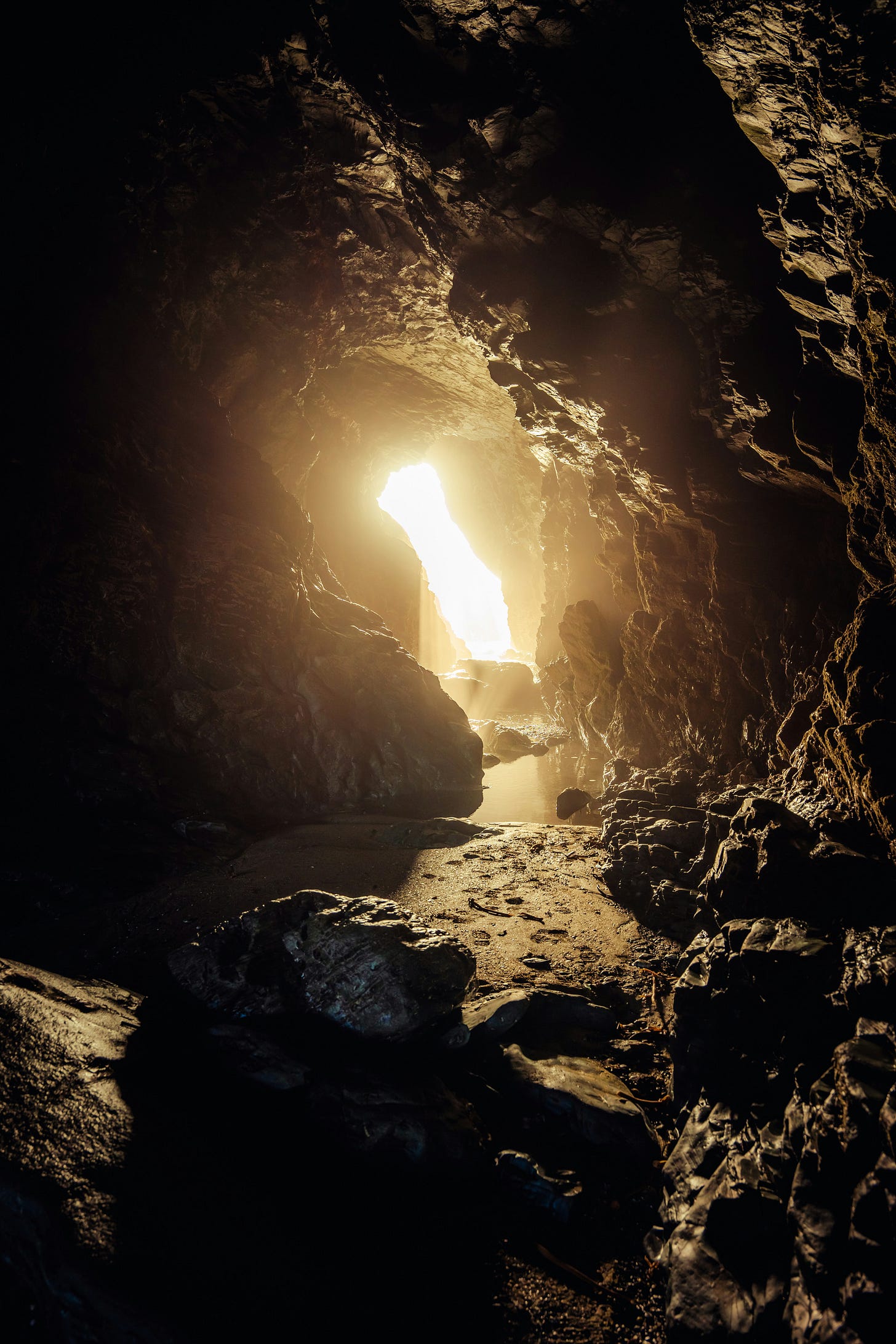
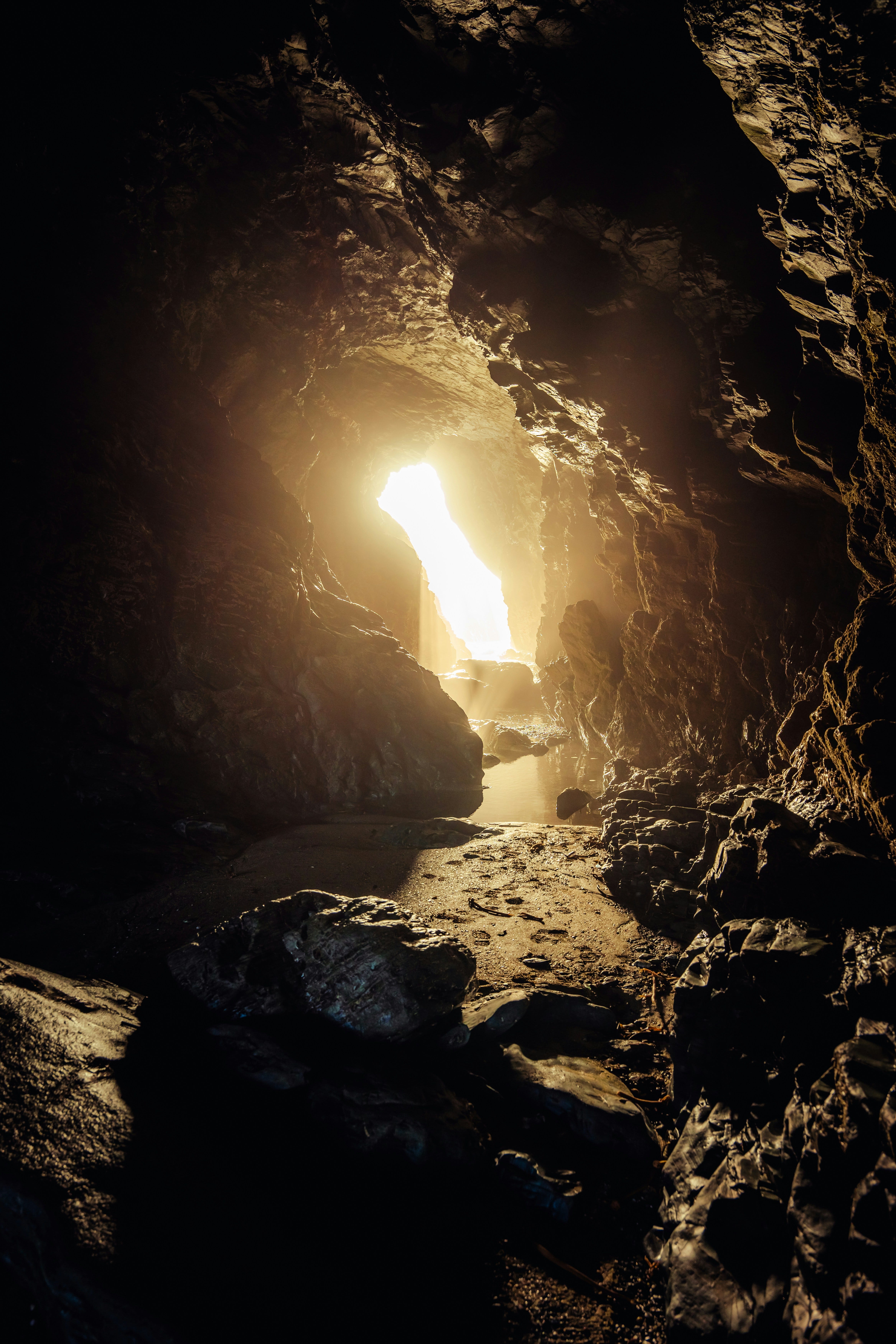
But motherhood has been an underworld for me.
It has been a time of self-erasure where I can’t be who I am or what I am. I could only exist for others.
Eventually, kids start to grow up, and need you less.
But I’m still relearning how to exist. I’m still climbing out of the hole.
Journeys Through the Underworld
We all go to the underworld eventually. It’s a time of darkness, a time of suffering, a time of lost control, pain you didn’t choose.
My journeys to the underworld usually involve a sense of shame. If I was different, if I had arranged my life differently, if I had somehow coped better, none of this would’ve happened. I wouldn’t feel this way. I think the shame makes it particularly hard to talk about how we feel. There’s a fear of revealing “how bad you are” if you tell people the truth.
There’s also invisibility. It’s often an experience no one else can see. Even when our visits to the underworld are precipitated by some obviously painful event, like a death or trauma, people expect us to get over it once the physical wounds have healed. But the emotional ones stay, and so we end up split between two lives, invisible. Part of us is trapped in the depths, still fighting whatever it was that happened to us, and the other part is trying to go through the motions of daily life. The part people see isn’t the part that matters.
There’s also an aspect of looking into the abyss and facing a total loss of self, of everything we held dear and believed we needed, of life itself. Whether you’re facing actual death or the death of a dream – of how you had wanted life to go, who you had longed to be. We have to question what core things we can actually take with us through this experience, and they are never the ones your ego wanted to look cool.
So how do we pass through the underworld?
To be fair, every underworld is different. They are so unique and personal and visceral. I can only talk about my own journeys through and some of the tools I’ve carried in my pack that have helped me.
Understanding first.
When we go through extremely painful experiences for whatever reason, our first instinct is often to suppress them, to avoid them, to explain them away, sort of like painkiller medication. Our first thought is to get rid of the pain, but that doesn’t change the source. It still hurts, and it will come back.
Instead, like a good functional medicine doctor, we have to investigate the root.
Often the hardest part of carrying pain is just that other people think we shouldn’t, and we can’t justify to them why we do.
So the challenge becomes stepping outside of ourselves, our own frame of judgment and reference, and the people around us, far enough to accept what we’re going through.
For me, it took years to figure out that my kid is biologically geared towards late nights – his hormones and metabolism just run on a different schedule. Fighting that schedule was the problem. It was NOT that I was just a horrible parent – which I didn’t figure out until years later when I was shocked to have another kid that just… goes to sleep.
I know I’ve screwed up as a parent. And I’ve also spent years on the other end, wishing my parents had done things differently. I know, now, that they didn’t know exactly what I needed or how to give it to me (sadly, adults are not omniscient). Properly caring for interminably unique humans takes a LOT of trial and error.
So I can forgive my parents’ ignorance, in my painful knowledge of my own. And I’ve learned to just stay open to what someone else is going through, to accept it and sit with it, without trying to change it or judge its origin story. And to assume that people are usually good and decent and trying their best but bumping into real invisible obstacles – rather than just being deliberately idiotic. Which is an acceptance I try to give myself too.
Surrender and Acceptance
Surrendering to the experience is basically just going with the flow of something you can’t change RIGHT NOW.
It’s my 2 AM acceptance. Little kids can’t sleep on command any more than adults. We’ve all had bad nights. Sometimes going with the flow and making the best of it is all we have available to us.
There’s always the question of what do you do if this experience is “unacceptable”. Something you know you still need to change.
The answer is: meeting it where it is, today, frees up the resources to actually look around for small ways to start to shift it. It’s not resignation – it’s distinguishing between what you can change (how you feel about it right now) and what you can’t yet change (the whole problem). And focusing your energy on where it WILL help.
Flowing with circumstances, instead of fighting them, is often what opens new possibilities that you didn’t see before.
Once you stop thrashing in the quicksand, you realize there’s a stick within reach.
Sharing and Perspective
I’m someone who likes to hurt alone, like an old feral cat. But hiding the things that you’re embarrassed about, ashamed of, your so-called “inadequacies,” is like throwing a can of lighter fluid on a burning building.
There are absolutely people you should not tell (that is, the people who will tell you you’re an idiot and reinforce the shame in the first place).
You can test people, like applying lotion to a small spot of skin to make sure you don’t have a freak allergic reaction. Tell people something a little vulnerable, and see if they make you want to jump in a pit of lava. If they do, talk about the weather and avoid them.
But telling people who understand what you’re going through is often exactly the medicine you need. Because your reactions are almost never horrible or incomprehensible – they were perfectly natural given what was going on, inside and outside, at the time you had them.
There was one time at a preschool meet-up when I embarrassedly told another mom, “Yeah, my family situation’s complicated.”
She snorted at me and declared, “Yeah! Whose isn’t!” I felt so… fine.
Humor and Play
Life’s bullsh*t is not optional. You can laugh or cry.
This probably is not appropriate for every disaster, but for me, moving through the hardest times has usually involved sarcasm, bizarre metaphors, and off-color jokes. It’s my coping mechanism (and usually a sign I AM coping, rather than just sinking).
Laughter helps relax and unclench your nervous system. It helps us endure things that would otherwise be unendurable. And it’s also a lot more fun.
Play, meanwhile, is like a cheat code for the emotional part of your brain. Dancing, singing, and making up stories helps activate, process, and release emotions that would stay locked down otherwise.
My 2 AMs were much nicer with music, and running in circles while pretending to crash my race car repeatedly was, if not my first choice for how to spend the middle of the night, at least amusing.
Lessons of the Ascent
I think we often only notice we’ve been in the underworld when we start coming out.
Hard times often last for years. Even if they were precipitated by a sudden incident, like a death, it takes us years to process, to change our lives around it, to become whatever it is we’re morphing into. It gets to be a frog-in-hot-water situation, where you’ve gotten used to the discomfort, so you no longer notice how bad it is.
It’s only as we start to ascend that we realize there are other perspectives, other options, other ways of being.
Joseph Campbell pointed out that when people come out of the underworld in stories, they almost always return with a boon. They have a treasure or wisdom that they needed to move forward.
Often it just changes YOU into someone stronger and wiser. I think of it as a lesson, but not the kind where someone has a “lesson plan” that you have to meet. More like a puzzle or a knot. You don’t have to put the pieces together or untangle it – but if you do, it helps unlock something you want in life.
Parenting has taught me about a million things. Highlights include what standards actually matter to keep (not what people think of you in grocery stores), how to hold a boundary when it makes someone else mad (thanks to screaming kids in car seats), and how to gently-but-firmly keep on the pressure for progress for years, even when you’d rather not (which is most of the time).
But I never notice these at the time. It’s only looking back that I can appreciate them.
Honestly,
This is one of those essays that I almost didn’t write, that I’ve rewritten 5 times.
I’m conflicted about this stuff in eight different ways. I’m embarrassed and ashamed I don’t have happier things to say about motherhood. I want to appreciate it more. I DO appreciate it (actually, my 5-year-old is already asking me to play). And I’m really tired. I’m still holding the tension.
Frankly, I’d rather talk about something happier too, and just keep this mess neatly under the rug.
It’s really on-brand for the underworld.
It’s full of stuff that is hard FOR YOU, that embarrasses you, that you’re conflicted about, that you wish you could change and can’t. That you just have to walk through. And someone else looks at it and says, “Hunh, why is she upset about THAT?”
What looks, from a distance, like a serene misty mountain, could be a battle of life-and-death for someone climbing at the top of it. It’s hard to judge someone else’s reality unless we have boots on the ground.
The underworld is like that.
Climbing out from the depths of the underworld is still a massive accomplishment. You go just as far as climbing a mountain. But it’s a climb that comes without fanfare. It’s often invisible. No one cheers.
But I’m cheering for you.
Thanks for reading,
Morgan
P.S. For a possibly better essay on holding tension, check this one out.
Leave a Reply