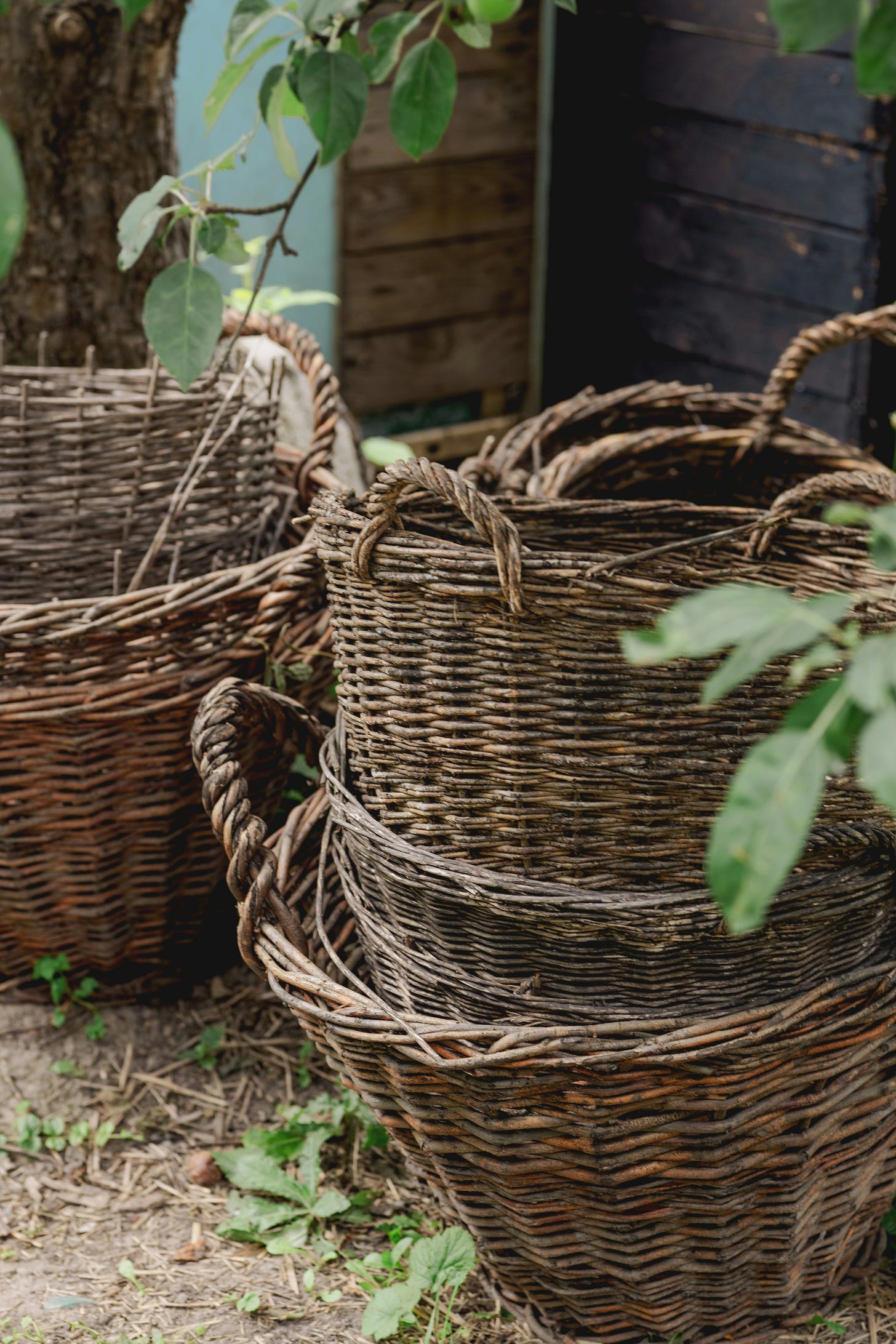
The first tools we think of for survival are knives and pointy sticks. If you are trying to survive in the wilderness with nothing but the clothes on your back, of course, you’ll want to chop down trees, hunt game, build a fire.
But the second tool you will need is a container. Something to carry and filter water. Something to hold foraged foods or hunted meat. A way to cook and process your food, and protect it while you look for more.
We think of survivalists and ancient humans with their multi-tools and flint-knapped axes.
We forget the baskets.
And creating containers to hold and protect what we need most to survive is one of the most overlooked problems of modern life.
Leaking What Matters Most
Once upon a time, nature was our container. Humans lived in the circumstances our nervous systems were designed for.
We had space, quiet, exercise, connection, meaningful activity. It was built into daily living – sitting in nature, tending the fire, carrying the water, chatting with our companions, doing things that mattered directly towards keeping us alive.
No more.
Now, our daily life is a continual assault on those very things.
- Our stillness and quiet is crowded out by the ten million things constantly shouting for our attention.
- Our lives don’t require movement, or using our bodies at all really, so we get lost in our heads.
- Our opportunities to connect with real people get fewer and fewer, and even conversations with people we’re close to compete with the endless scroll.
- Our incredibly efficient economic system has completely separated us from the fruits of our labor and any sense of fulfillment.
We Need Containers
We aren’t all going to throw our phones in the river and run off to the woods, though.
Instead, we need containers.
We need to define times in our day for space, stillness, quiet.
We need to make agreements around relationships and work that let us put what we value most first – connection and meaningful results.
And one of the most important jobs of a container is to hold out everything else.
It’s a space in which we say “no” to all the other stuff.
- No screens from 4-10.
- No work until I’ve meditated.
- No scrolling until we’ve talked.
In a world of too much, we need to get better at defending the space for less.
How to Use Containers in Your Life
First, identify those things you need and keep loosing – things like peace, quiet, space, focus, contentment, creativity, joy.
Identify times and places in your day that you can block out for these things. Schedule it like a meeting if you have to. Or, hang it on a habit you always do anyway, like after your morning cup of tea, or taking off your shoes after work.
Set a timer at first. Focus on one thing. Or sit quietly. Or do something that often brings you joy.
Warning: you won’t feel it at first. It doesn’t always feel good.
That is PART OF THE PROCESS. The good feelings aren’t a sign that it’s working at first.
The work is to push through the boredom and the rising agitation that you should be doing something else. Just sit with it, allow it. Ideally, stay with the task until after the agitation starts to pass. That is the muscle you are building.
You can also use tricks to signal your body that your are in a “contained space” now. Sit a special way. Wear a special shirt. Eat a special food. Wash your face first.
We are building our awareness of the container like a ritual.
Eventually it will become automatic.
Protect it, value it.
That is how we protect the space we need to be human.
Leave a Reply